
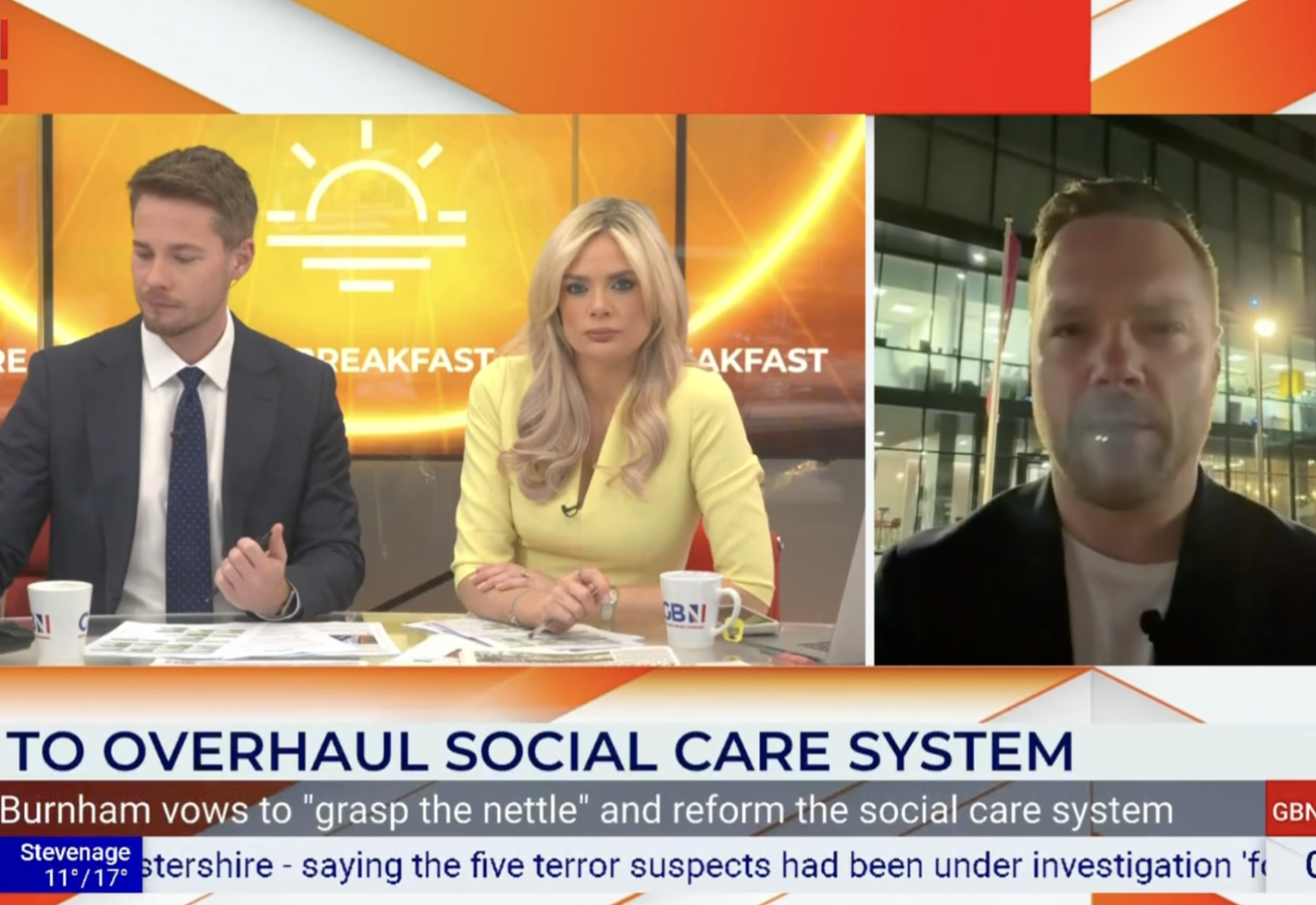
Good morning from Liverpool, where I’ve just come off GB News (here). This is Andy Burnham’s first conference as prime minister and he opened yesterday with the biggest domestic promise he has made since July. Labour will go into the next election offering a national care service for England, built on NHS principles: taxpayer-funded and free at the point of use. His words on the BBC were that he is going to “grasp the nettle” on social care. His father Roy, who had Alzheimer’s, died earlier this month, and Burnham didn’t hide that it is personal. Anyone who worked with him on this in 2010 knows it has been personal for a long time.
The substance is bold and the detail is thin, deliberately so. Burnham calls the current system “as unfair as American healthcare”, where the most vulnerable can lose everything, and warns that leaving it broken will break the NHS too. The funding is to come from a dedicated new tax, with the rate and structure left for later. He has promised a timetable this week. What he hasn’t promised is delivery this Parliament. This is a manifesto pledge, and a pledge you fight an election on is a very different thing from a bill you have to pass before 28 October. He also made the point that none of this works without trust and consensus. That is an invitation to the other parties. It is also a trap for them. Expect Badenoch to be asked in Birmingham next week whether she’ll sign up or oppose a new tax for care.
The Budget is the shadow over everything here. The message from the Treasury team is the one every Chancellor gives at conference before a difficult autumn: hope, but costed. Borrowing costs are up, the Strait of Hormuz is still feeding into energy prices, and the three fights I flagged last week (welfare, the mansion tax threshold and the housing target) haven’t gone away because the hall is in a good mood. Burnham’s speech is tomorrow. The line trailed so far is that it’s time for Britain to have hope again, alongside a call to “draw a line” under a decade of Brexit drift. Watch for how much of the care timetable he’s willing to put in front of the cameras, and whether the North Sea gets a mention.
The mood is good. The room is not full. A lot of Labour MPs simply aren’t here, and not all of them are on constituency business. Some are hedging, some are exhausted after the summer, and some are keeping their powder dry for the Budget and the welfare votes that follow it. More interesting is who has turned up. A number of the new ‘second term group’, a small number of Starmer-era departees, have come to Liverpool for 24 hours or so: a reception, a couple of fringes, a drink with old colleagues, then home. Nobody is rocking the boat. Nobody wants to be the story. I’m told the message they’re giving in private is support for the PM, with an eye on being useful later. That’s a sign of how settled the leadership looks right now, and of how quickly people will start positioning if it stops looking that way.
It wouldn’t be a Labour conference without a London subplot. Sadiq Khan has said he intends to stand for a fourth term in 2028. That hasn’t stopped a steady stream of people sounding out whether there’s a nomination worth running for, quietly, over coffee rather than on the fringe stage. Most of the conversations I’ve heard are less about 2028 than about what happens if Khan changes his mind, and how early you would need to be organised if he did. The other parties already have names in the frame: James Cleverly for the Conservatives, Laila Cunningham for Reform, Sarah Olney for the Lib Dems. Labour is the only one of the four whose race hasn’t started, officially. Unofficially, it’s happening in the bars on the Albert Dock.
Housing is the other thread worth following. Angela Rayner has announced stronger powers for councils to take over empty homes, cutting the empty period threshold from two years to six months, in pursuit of the 1.5 million homes target. It is useful at the margins. It won’t close the gap the OBR is worried about. For anyone in the planning world, the real questions this week are about the Budget and what the housing number looks like after it.
Burnham has picked the hardest issue in domestic politics and told the country he’ll fight an election on it. Every prime minister since Blair has promised to fix social care. Most found a reason not to. The difference this time is that he has put a tax, a timetable and his own family story on the table in the same weekend. That’s what grasping the nettle looks like. Whether it stings is for the Budget to decide.
Have a great week, Kevin
p.s. Last week’s Political Business came from Lib Dem conference in Brighton, with Associate Director Stephen Gregory on the ground and in the fringe rooms. If you want to know what the party is saying to itself about Ed Davey, start there. Listen on Apple, Spotify or YouTube.
Forwarded this email? Sign up to the Lowdown here.