

Good morning,
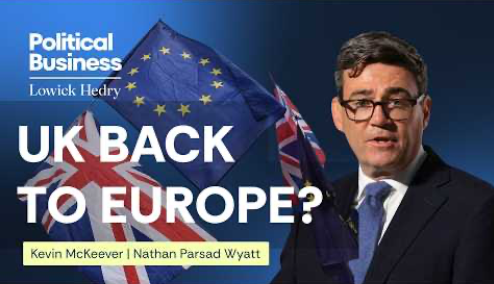
Is the Prime Minister’s EU deal a masterstroke or a trap? I think it’s both, and which one wins comes down to a single choice. If Andy Burnham keeps talking about food prices, he’s onto a winner. If he keeps talking about membership, he hands his opponents the one fight they’ve been waiting for.
The deal itself is modest and sensible. Food exports lose their border checks in return for following EU agrifood rules. Carbon markets link up from 2028, taking the sting out of Brussels’ carbon border tax. And 100,000 young people a year can go each way for up to three years. No.10 says it adds up to 0.5% to GDP, around £17bn. He makes the case in the Commons this afternoon, and the Cutting Costs Bill follows on Thursday.
On substance, the public is, currently, with him. Opinium (18 to 20 November) has 60% wanting a closer relationship with the EU, and 47% saying Brexit has done much more harm than good against 14% who say the opposite. More in Common has the youth scheme on 51% to 21%. Labour leads with every pollster: 30% with Opinium, 28.6% on the PollCheck average. Add the Lib Dems and Greens and the parties backing closer ties are close to half the electorate. Burnham himself is on +4 net approval. Farage is on -28.
The right, meanwhile, is split almost exactly down the middle: Reform 22%, Conservatives 21%. Both spent the weekend competing to be angriest. Farage called the deal a betrayal and the Prime Minister “a total fraud”. Kemi Badenoch said the growth figure was “plucked out of the air”, and the Tories told the Sunday Telegraph the carbon link would add £125 a year to gas bills and that they’d scrap it. Both take that message to the CBI today. Telling business that easier trade with Europe is a disaster is a brave choice.
But the trap? The Times quoted allies saying Burnham wants to take Britain back in. Theresa May told Laura Kuenssberg she was “aghast” and that he should “accept Brexit and move on”. Even Tony Blair, in the Sunday Times, called Brexit “a real mistake” but would only rejoin if the EU reforms on tech.
The rejoin numbers are much thinner. Opinium has just 36% for rejoining and 55% for staying out in some form. YouGov’s big experiment has rejoin comfortably ahead in the abstract, but level at 40% each if the euro is part of the price. Leave-voting Labour supporters are among the most likely to change their minds once the terms are on the table. Those are exactly the voters John Healey, Lisa Nandy and Yvette Cooper need in their Leave-voting seats. One minister told the Telegraph this month the debate had “reignited support for Reform that was waning”. The Chancellor still doesn’t expect to see Britain rejoin in his lifetime.
May’s real point wasn’t sovereignty. It was bandwidth. A rejoin debate swallows a government whole, and this one has a full in-tray: Milburn’s welfare reforms, Rosebank, the cost of living. Reform is well off its peak. Nothing would revive it faster than another decade arguing about Brexit.
The first test is already set. Tuition fees were left for six months, and the EU reportedly won’t ratify until it gets home fees for its students. Universities put the hit at £500m without compensation. Someone will have to pay it.
The Makerfield test still works. The deal passes it. The rejoin talk doesn’t, yet. His ten-year plan lands next month with his view on the long-term options, and that’s the moment that decides which story this becomes.
Three takeaways for anyone around public affairs:
- If you trade food with Europe or pay carbon prices, Thursday’s Bill matters more than today’s statement.
- If you’re in higher education, the next six months on fees are the real negotiation. Get in early.
- Expect Europe to dominate the noise into the new year. Other policy will get less airtime and fewer ministerial hours, so plan accordingly.
Theresa May told him to accept Brexit and move on. The deal does exactly that. Rejoin talk would mean none of us gets to move on at all.
Have a great week,
Kevin
p.s. Catch our latest episode of Political Business: listen on Apple, Spotify or YouTube.
p.p.s. Get the Lowdown straight to your inbox and start the week ahead of the rest! Subscribe here.
Our view