
Reflections from Reform Party Conference
Birmingham hosted the first party conference of the season this year. Reform UK’s three days at the NEC (3 to 5 September) were bigger than last year’s: more delegates, more stalls, and the party’s first ever dedicated business day. I was there for all of it, and I came away with a clearer sense of where the party is heading, and a messier one of how it plans to get there.
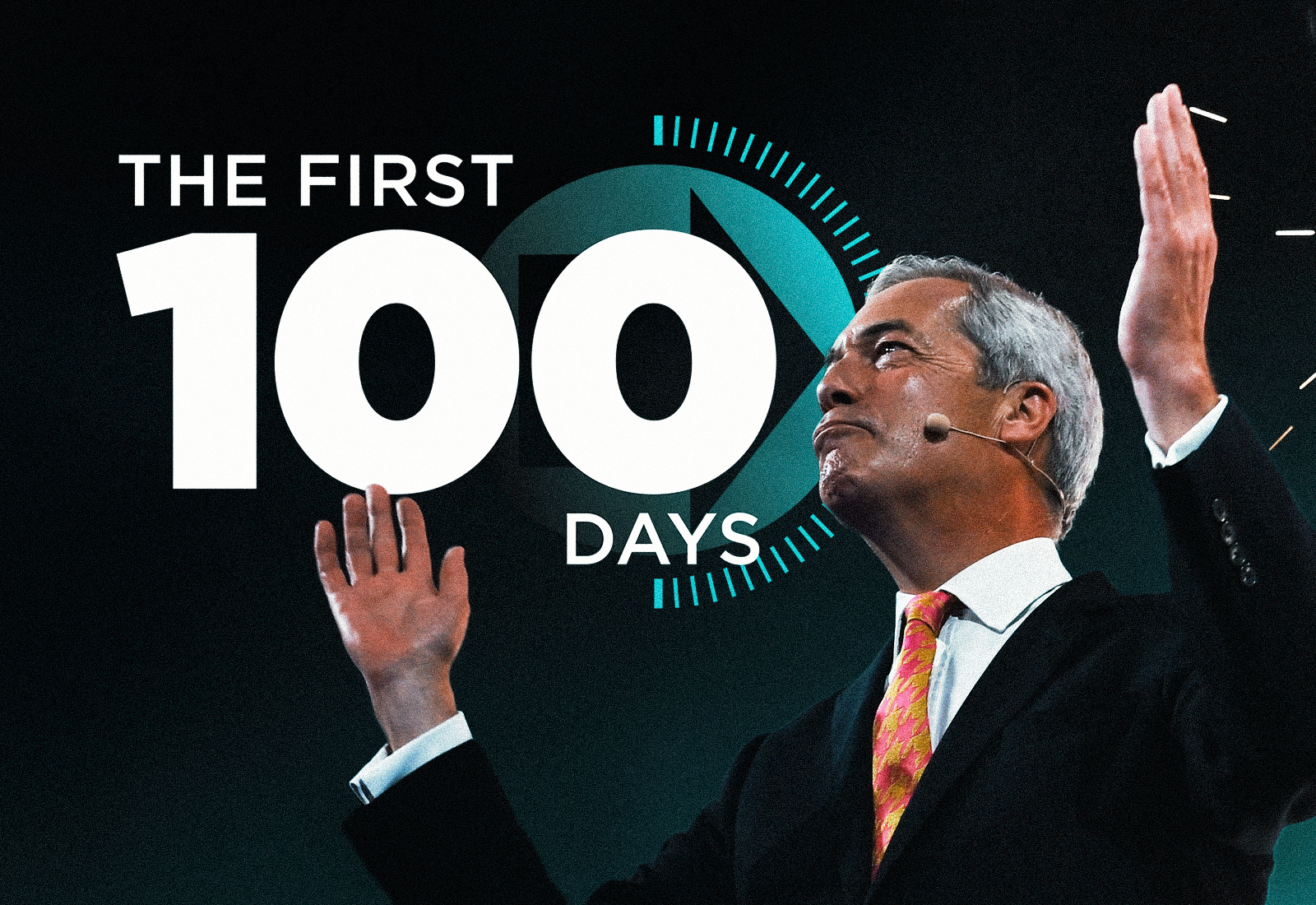
Reform wanted this conference to be about what a Reform government would actually do in office. Robert Jenrick’s plan to find £100 billion in savings in the first 100 days. A sweeping deregulation of the planning system. A promise to bring energy bills down. The pact with Jordan Bardella on stopping small boats. An increase in the personal tax allowance. A first real attempt to sound like a government-in-waiting rather than a protest movement. Instead, one story took the whole thing over. On the Thursday evening, hours after the business day and the planning launch had wrapped, Channel 4 News and the investigative group Verbatim aired undercover footage of two of Nigel Farage’s most senior aides, Dan Jukes and James Orr, discussing how an American donor could get money into Reform without appearing on the UK electoral register. The same undercover team had already funded £32,500 of polling that shaped Reform’s messaging ahead of May’s local elections, without the public knowing where the money came from. There was talk of a much bigger sum too, £500,000. Farage himself, caught at a lunch with the same undercover team, said thank you. Twice.
Jukes and Orr were suspended within hours. Farage called it loose pub talk. The next morning, the party chairman said there was no chance of either man coming back; the deputy leader said live on the radio, minutes later, that it wasn’t his call to make. Two of the party’s most senior figures contradicting each other before the day’s proceedings had even started. The first 100 days plan barely got a mention after that. Reform spent the rest of the conference fielding questions about a fake American and his fake son instead.
A party still finding its professional footing
Underneath all that was the story I’d actually gone to Birmingham to see. Business is still a little uncomfortable around Reform, and that was obvious in the room even before Thursday night gave it fresh cause. But the trip wasn’t wasted. The business day itself was well run, better than sceptical colleagues had predicted, and more than one old hand I bumped into on the exhibition floor made the same point unprompted: it was the first Reform gathering that felt like a genuine party conference rather than a rally. It told me something real about where the party’s economic thinking is heading, even if the destination is still being sketched out.
The more interesting story runs underneath both the policy and the scandal. There’s a real tension between the people who built Reform and the people who’ve recently joined it, and you hear it the moment you step outside the main hall. A number of the former Conservatives who’ve crossed the floor over the past year are visibly frustrated by the lack of professionalism they find once they get there, and said so, more than once, without much prompting. A conference dominated by a donations sting involving the leader’s own inner circle is exactly the kind of episode that frustration feeds on. You have true believers who built this movement on energy and grievance and speed, and a newer intake of political professionals who know what a functioning opposition-in-waiting looks like. Both groups want power. They don’t agree on how a party actually gets and keeps it, and Jukes and Orr have just handed the professionalisers their best argument yet.
Farage’s own conduct told the same story. He was far less present than last year, controlled appearances rather than the free-roaming leader of 2025. That was presumably a deliberate choice even before Thursday night, to protect him from exactly the kind of chaos that found him anyway. It meant the party had to stand on its own feet for long stretches, and it didn’t always look steady doing it. This doesn’t yet feel like a fully cohesive team. The real test of a party isn’t how it behaves when it’s riding high. It’s how it behaves when things get hard. Reform has had a hard few months. Birmingham was the first proper look at how it handles that. Unevenly, is the honest answer.
A more complicated poll story than the headlines suggest
The story on Reform for most of the past two years has been one of relentless rise. That needed updating before conference even began. The party peaked around 34% last September and held a clear lead through the spring. By August it had been drawn level with, and on several measures overtaken by, a Labour Party newly reinvigorated under Andy Burnham. The polls all told roughly the same story. A genuine narrowing, not noise. Reform arrived in Birmingham needing this conference to reassert momentum it could no longer take for granted. It leaves having spent most of it managing a scandal instead.
The planning announcement business should actually care about
Buried under all of it, and far more consequential for our clients than anything said from the main stage, was Reform’s planning platform. Richard Tice launched it on the first morning of conference, before the scandal broke, to a room fuller than the slot deserved. It’s a genuinely sweeping deregulation package that deserves more attention than it’s had: the Planning Teal Paper, Reform’s own name for it, playing on the party’s trademark colour rather than the usual Whitehall white paper. The headline is a presumption of approval for brownfield residential schemes in all but the most exceptional cases, regardless of whether an area can demonstrate a housing land supply shortfall. Around that sits a suite of changes that would reshape delivery economics on brownfield sites: scrapping Biodiversity Net Gain requirements, landfill tax and Section 106 payments on brownfield housing schemes, cutting affordable housing requirements on those sites to 5%, abolishing spatial development strategies altogether, and capping local plans at five years with a review built in at year four. There’s a high street strand too: a consultation on cutting or lifting the threshold for business rates on retail, hospitality and leisure premises in town centres, with Tice pitching empty shops and hollowed-out high streets as a genuine emergency and floating a new delivery tax on out-of-town distribution hubs to help pay for it. It’s out for consultation until the end of December, and Reform is actively inviting industry responses, worth knowing if your organisation wants a formal line into it.
Agree with the direction or don’t. This isn’t a rounding error. For anyone advising landowners, developers or investors on political risk, it’s the clearest signal yet of what a Reform government might mean for how sites actually get consented, a far more radical departure from the current NPPF trajectory than anything else on the table. It sat alongside Robert Jenrick’s pledge to find £100 billion in savings within Reform’s first 100 days, further welfare cuts, and the boat-stopping commitment that Thursday night’s revelations so comprehensively upstaged.
The right isn’t hollowed out. It’s split.
Reform’s senior team now carries a run of familiar Conservative names: Jenrick, Braverman, Zahawi, Dorries. Watch that procession long enough and it’s tempting to conclude the British right has simply relocated wholesale to Farage’s party. It hasn’t. The Conservative Party is bruised, but it’s very much alive, and it still holds a meaningful base of talent, infrastructure and voters that hasn’t gone anywhere, whatever a handful of defectors at the NEC bar wanted to tell you over a pint. What we’re watching is a genuine split within the right of British politics, not a wholesale switch of allegiance from one side to the other. The contest for who gets to call themselves the true party of the right is nowhere near settled, and it was as present in the fringe conversations at the NEC as anything said from the podium. A conference remembered for a donations sting rather than a coherent governing prospectus hasn’t settled it in Reform’s favour.
Where that leaves the question everyone’s asking
Zia Yusuf’s own run of internal clashes, most visibly the row that saw Tim Montgomerie suspended after criticising Yusuf’s language towards a former Conservative minister, and the chatter since about Yusuf’s own leadership ambitions, was simmering long before this week. It’ll keep simmering after it. Add Jukes and Orr on top and Birmingham looks like a party behaving very much like every other party that’s ever tried to professionalise under pressure: factional, occasionally undisciplined, not always able to control its own headlines. Whether Reform can reform itself enough to become a genuine party of government is exactly as open a question as it was before this conference. If anything, more so.
On the podcast, and what’s next
We covered a lot of this in more depth on the latest episode of Political Business, including a conversation recorded at conference with Laila Cunningham, Reform UK’s candidate for Mayor of London. Worth a listen if you want the fuller picture from someone who’ll be fighting that campaign directly.
Listen on: Apple, Spotify or YouTube
Conference season doesn’t pause for reflection, and neither should our clients’ engagement with it. The Liberal Democrats gather in Brighton from 19 to 22 September, and we’ll be there in the same way we were in Birmingham: reading the room, not just the press releases.
If you’d like to talk through what any of this means for your organisation’s political risk and engagement strategy, get in touch at tomorrow@lowickhedry.com.