

Good morning,
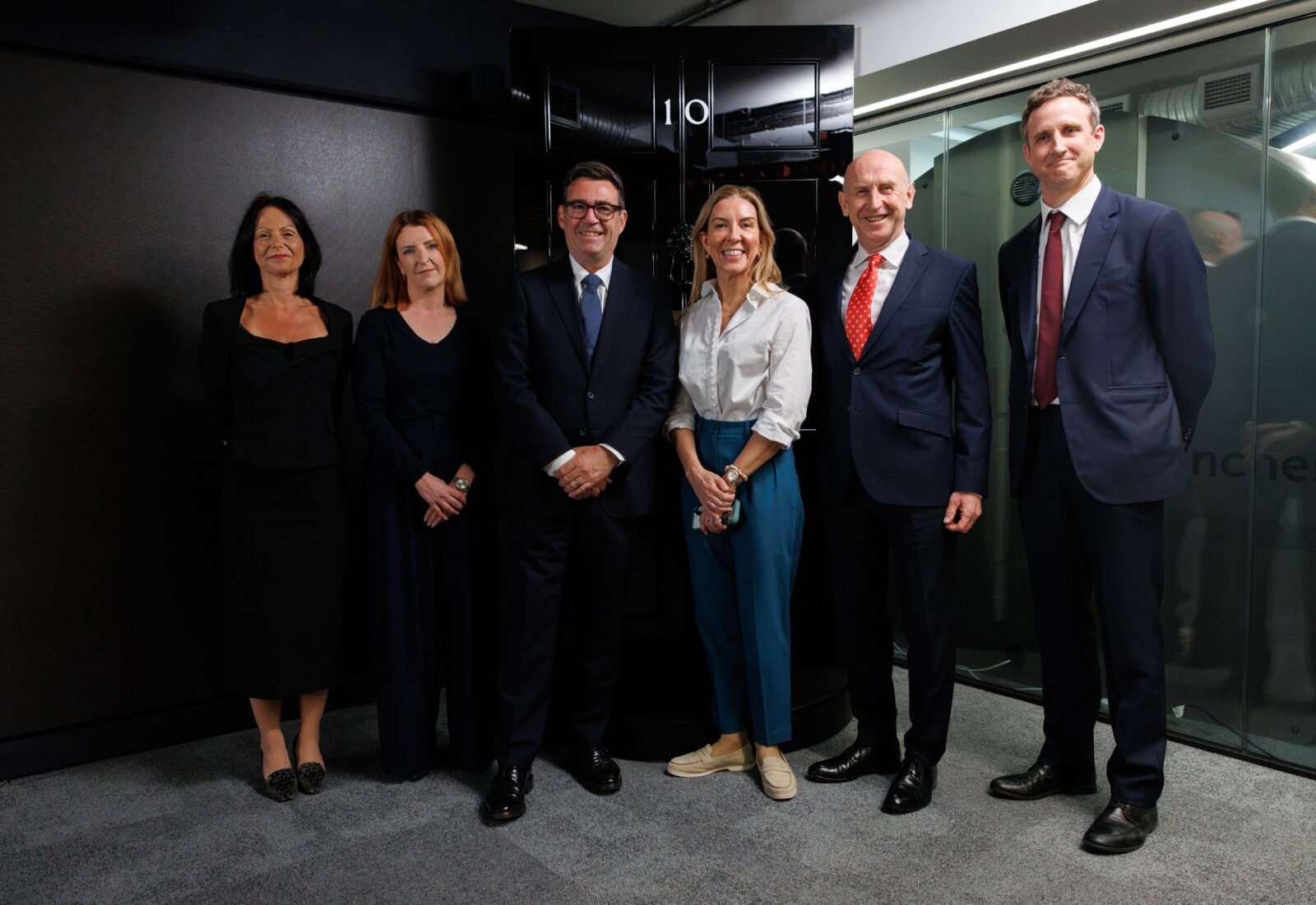
I was back in Manchester last week, and it’s hard to miss what Burnham’s built there. No. 10 North sits in a modern office block that also holds a pub (the Slug & Lettuce, use the app if you don’t fancy queuing for a pint), a register office and a GCHQ outpost, an odd mix of uses that somehow makes sense once you’ve stood in the lobby. He works out of it one day a week, full-time team behind him, Larry the Downing Street cat present in cardboard cutout form.
Last week the substance was tax. Burnham announced mayors will keep a bigger share of the income and business tax raised in their own patch, “the biggest transfer of power, funding and responsibility from Westminster in a generation,” by his own words. We said then that Burnham understands something most prime ministers don’t bother learning: symbols move faster than statute. This week the statute caught up.
Burnham chaired his first monthly situation room session in that same building, mayors and ministers dialling in from across the country. Angela Rayner cracked a joke about someone’s dad dancing. “Media are present,” Burnham reminded the room, half grin. John Healey congratulated Bev Craig, on screen fresh off her win as the new Greater Manchester mayor.
The reason they were all in it together: Burnham had asked each of the 14 devolved mayors what they wanted most, and what powers they needed to actually deliver growth. The answer is now a whiteboard outside his office with 28 projects on it, a tram system in West Yorkshire, a new station in Bradford, an AI growth zone in Tees Valley, a big housing scheme in Bristol. One answer sits above the rest. Mayors get the call-in power Sadiq Khan already has in London: pull a council’s planning application in, then wave it through or kill it, above a threshold of 150 homes, 15,000 square metres of commercial space, or anything 30 metres tall.
Downing Street made it official over the weekend, a press release from Number 10 and Burnham’s own office confirming the powers and adding one the Sunday Times hadn’t reported: mayors will also be able to pre-clear sites for development, so a builder doesn’t need to apply at all. Detailed proposals land next week. No vote needed on the power itself, councils still decide most applications, and ministers keep a backstop to step in.
The real story isn’t the power. It’s who asked for it. Ten of the 14 backed the plan, cross-party, before it was even announced. At least eight wanted Burnham to go further and cut the threshold to 50 homes. That’s not Whitehall handing devolution down to reluctant regions. That’s mayors queuing up for the keys.
It helps that some of them already have the receipts. Salford delivered 7,584 homes against a 4,249 target over the last three years. Leeds hit 11,690 against a requirement of 10,151. Knowsley built 1,888, more than double its 772 target. Downing Street’s own case for handing over more control is that some mayors have already beaten Whitehall’s numbers without it.
The money arrives into a worse picture than when it was promised. Inflation hit 2.9 per cent in the year to July, pushing up materials, wages and borrowing costs on every scheme in the pipeline, and the government borrowed £2.3bn more than expected that same month. Homes England’s £39bn affordable homes pot still comes under mayoral direction, first allocations due out shortly, but Healey has less room to move than he did when the number was first put on paper.
There’s more money moving alongside it, worth keeping separate rather than folding into that £39bn figure. £1.3bn of a national land and infrastructure fund has already gone to the seven most established mayoral areas, another £234m in brownfield funding to seven newer mayoral strategic authorities, and £1.5bn is earmarked through a Housing Accelerator Fund. Mayors outside London also get a development levy of their own now, the same tool that helped pay for the Elizabeth line.
Rob Ford at Manchester University put the underlying problem plainly: on funding and decision-making, Britain remains one of the most centralised democracies in the developed world. That’s the gap Burnham, nine years running Manchester rather than a department in London, is trying to close. “Manchesterism”, his mix of private investment and devolved decisions, filled the city centre with cranes while he was mayor. It didn’t reach the outer boroughs the same way, and Reform picked up the difference. Burnham isn’t pretending otherwise now. “If you go back just before the pandemic, the supply of truly affordable housing wasn’t keeping pace,” he told the paper. “The risk is then that people think they’re being shut out, or that it’s gentrification.” Fair point: 15,000 people are still on Manchester’s own social housing list, skyline of cranes notwithstanding.
Where it gets interesting is inside Labour itself. Burnham backed locals fighting a 2,000-home scheme at Hindley Green during his own Makerfield by-election in June, brownfield-first argument and all. Bev Craig, his successor as Greater Manchester mayor, now holds the exact call-in power he’s just created, and could use it to push a scheme like that through anyway. Put to him directly, he didn’t dodge it: “Do you want somebody who’s elected by the people of that area to consider a decision, or a far less accountable decision-making process?” Handy answer when you’re the one who built the more accountable-sounding option.
Developers are cautiously into it and no further. Tim Heatley at Capital&Centric put it well: “We are delighted to build social and affordable housing,” he said, “but no government in the past has been willing to pay for it. We are housebuilders, not magicians.” Permission was never really the constraint. Money was, and still is.
This is the terrain we spend our time in. The mayoral offices that just picked up these powers, South Yorkshire, Greater Manchester, the rest, are exactly the relationships that matter now if you’ve got a scheme anywhere near a mayoral combined authority. The call-in threshold is the only number worth knowing before the council even opens the file.
Not everyone’s applauding. The Conservatives call it stripping councils of their ability to make decisions. Reform calls it centralisation in disguise, a line that sits oddly next to Burnham’s own “biggest transfer of power” pitch. The Liberal Democrats go furthest: spokesperson Gideon Amos calls it a “direct attack” on communities, arguing that taking powers from councillors is taking them from local people. Put the nimby question to Burnham directly and he doesn’t flinch from it. “It’s not all about Nimbyism,” he said. “Sometimes it’s the other way round.” Read: the power unblocks a reluctant council just as easily as it overrides an angry one. Housing minister Matthew Pennycook is making the same case in interviews this week. Whether that’s principle or convenient cover depends entirely on which side of a call-in notice you’re standing on.
I think the gimmick criticism is fair. I also think it’s beside the point. A cardboard cat and a pub with its own app are theatre, no question. But the whiteboard with 28 real asks on it isn’t, neither is a call-in power ten mayors wanted before he’d even offered it, and neither is Downing Street confirming the whole thing in writing before we’d even sent last week’s edition. The building got people talking. What matters is everything past the Manchester skyline, and that’s what we’ll be watching through the autumn.
We’ve got an announcement of our own coming, something Nathan and I have been working on. You’ll be among the first to hear it, more very soon.
Have a great week,
Kevin
p.s. I was on GB News one the weekend, going head to head with Reform UK’s candidate for London Mayor, Laila Cunningham. Catch up on a spicy segment below:
Get our Monday morning Lowdown email in your inbox by clicking here.
Our view