

Good morning from Birmingham,
Two conferences, a day apart, and the same question hanging over both.
Do you want to be right, or do you want to win?
The Greens answered it in Brighton on Sunday, and not the way their leader would have chosen. Conference voted 1,022 to 813 to adopt a policy treating Zionism as a form of racism and calling for a single Palestinian state. Four of the party’s five MPs opposed it. Adam Wagner KC, who led the case that found Corbyn’s Labour broke equalities law, reckons the motion has a strong chance of falling foul of the Equality Act. And there is real disquiet among senior Greens that it was carried by people who joined for this one cause and have little interest in anything else.
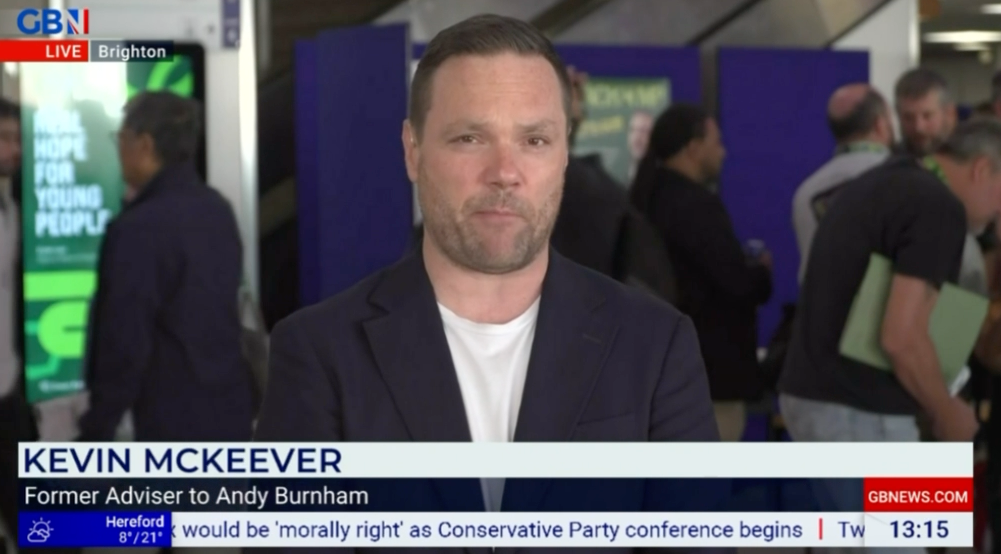
I was live from the conference making the point that this is the Greens’ defining test. A party that wants to be the serious home for the progressive left, with several familiar ex-Labour faces now in its ranks, can’t also be a vehicle for whichever single issue can pack the hall. The timing is brutal.
Zack Polanski, the Green leader, faces voters on Thursday in Starmer’s old seat facing Labour’s Sagal Abdi-Wali, the leader of Camden Council. Senior Greens were briefing me that if Polanski loses on Thursday he’ll survive as leader, in part because there’s no challenger ready to strike. A motion like Sunday’s is not what you want in the last week of a London by-election.
Then up the M6 to Birmingham, where the Conservatives have arrived with something they haven’t had since 2024: an argument. Kemi Badenoch has published The Right Way, 95 pages and 30,000 words on how a Tory government would think, deliberately modelled on Thatcher’s The Right Approach, which came out 50 years ago this month and three years before 1979. Her case is that the last Conservative governments never worked out their first principles, so they met every crisis one at a time. She is unusually candid about the record: lower immigration promised without a plan to deliver it, net zero legislated before anyone had an affordable route there, Brexit without the economic strategy that should have come with it. Labour, she argues, goes wrong when it follows its principles. Tories go wrong when they forget theirs.
The central claim is aimed squarely at Number 10. “Government doesn’t create growth. People do.” Public control is recast as state control by another name, and Manchesterism as a mayor’s theory of politics: popular because you spend a pot of money someone else raised, a luxury no prime minister gets. I think that misreads what Burnham has actually built, and the whole point of fiscal devolution is that mayors raise more of their own. But it’s the sharpest attack the Tories have managed since July, and it lands in the right place. The Times makes the same case in its leader this morning, pointing to a care service costing around £18bn a year with no funding plan, and a budget hole of roughly £10bn before 28 October.
The weak spot is the gap between principle and politics. A pamphlet built on fiscal realism sits awkwardly with the triple lock, and the line on it has already wobbled: Badenoch says keep it, her deputy says they intend to, her shadow chancellor says for this parliament. Then came the conference blizzard, free childcare extended above the £100,000 cap and 50,000 more prison places, paid for by cutting quango jobs and the aid budget. Decent retail politics. But the pamphlet says policy comes last, and two days in it’s coming first.
None of which changes the bigger picture, which is that Badenoch arrives far stronger than a year ago. Jenrick has gone to Reform, the party is hers, and she’s telling would-be candidates who don’t like the programme to wait until someone else is in charge. The arithmetic helps too. Opinium has the Tories third on 17, eight points behind Reform, yet UK Polling Report’s seat model puts them ahead of Reform in seats, 122 to 98, because Reform’s vote is spread too thinly to convert (more in our Sunday Polling update here). That’s why she can talk about winning without being laughed off the stage.
The Greens chose purity three days before a by-election. The Tories have chosen an argument and are still deciding whether to live by it. Thursday tells us who read the room.
If you’d like to understand what all this means for your business, organisation or cause, do get in touch.
Have a great week,
Kevin
p.s. catch up on our Labour conference special of Political Business (here), live from the floor in Liverpool on Burnham’s speech, the triple lock and social care, including my interview with Defence Secretary Wes Streeting.
Get the Lowdown straight to your inbox and start the week ahead of the rest! Subscribe here.
Our view