

Birmingham 2026: Kemi’s party
A year ago, Kemi Badenoch arrived at conference with her leadership being written off. The polls were poor, Reform was pulling ahead, and her shadow chancellor of the time, Mel Stride, used the eve of conference to warn colleagues off another leadership contest. The Spectator’s Tim Shipman called the mood in Manchester “Copeium”. This year it was “Hopeium”.
A lot has changed. People have gone. Robert Jenrick and Suella Braverman are with Reform, and Badenoch joked about it from the stage, calling the defections an “export boom of drama queens”. The noise went with them. Birmingham was upbeat. Perhaps too upbeat, given that the party’s poll rating has barely moved.
An argument at last
The shift is intellectual. The Conservatives are going back to first principles: low tax, a smaller state, free markets, made without apology. Against Andy Burnham’s case for a bigger state, that is a clear choice, and the party was visibly pleased to have it.
The Right Way, published on Sunday, is the marker. It is modelled on Thatcher’s The Right Approach of 1976 and is meant to be the base for policy before the next election. The principles are blunt. Wealth has to be created before it can be shared out, and government should be judged on what it achieves, not what it intends.
It is also hard on the party’s own record. Badenoch writes that the Conservatives promised lower immigration without a strategy for delivering it, legislated for Net Zero without a feasible route, and left the EU without an economic plan. That is not a note you hear often at conference.
More traditional, and getting more so
This is a Thatcherite party again, free market and pro growth. With Andrew Griffith now shadow chancellor, I’d expect it to sharpen.
The announcements fit. The family home would come out of inheritance tax, with no stamp duty on purchase and no Family Homes Tax, the high value council tax surcharge. Employer National Insurance for 21 to 24 year olds would be halved, from 15 per cent to 7.5 per cent. The childcare cliff edge at £100,000 would end. The updated savings plan targets £71bn, with half of it going to deficit reduction under the party’s golden economic rule.
Natural England and the Environment Agency would both be abolished, with their functions returned to Defra. The message is anti-bureaucracy, and unapologetically so.
Who it is for
The pattern in the announcements is deliberate. As briefed by those around her, the plan has two stages. First, win back the affluent southern voters who have drifted to the Liberal Democrats and Labour, and overtake Reform as the second party. Then persuade Reform voters that only the Conservatives can keep Burnham out.
Most of the big announcements point at that first group: homeowners, parents on higher incomes, their children looking for work. Badenoch even compared the party to M&S, once stuffy and written off, now back in fashion. It is a coherent strategy. It also means the Red Wall got less attention than it did in 2019, and immigration was left to Chris Philp.
The speech
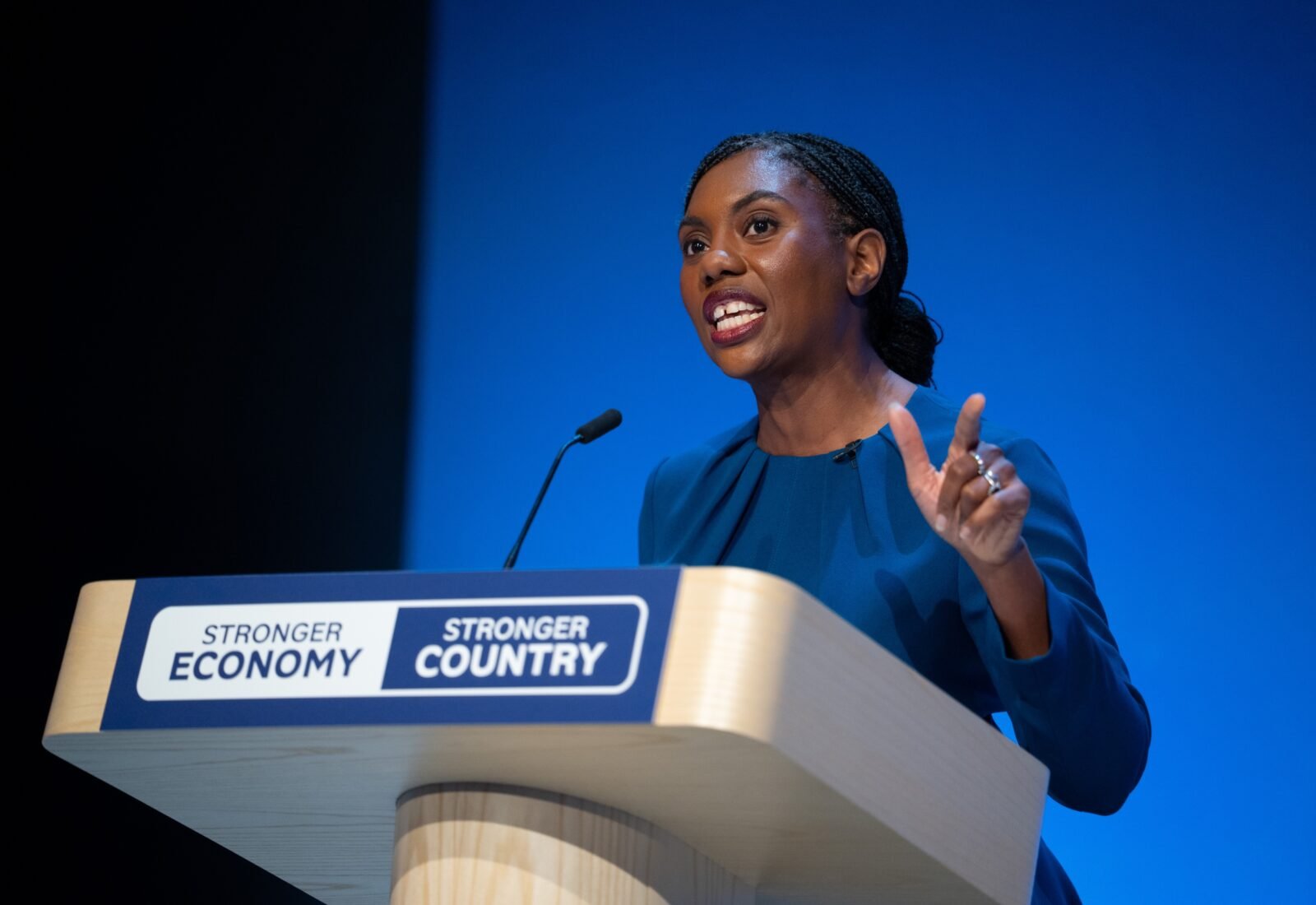
It was slow to start. Then she got into it, and it covered a lot of ground. She namechecked every member of the shadow cabinet. She dug into Burnham, accusing him of wanting to wind the clock back to 1970s economics, and warned against reopening the Brexit argument. She made the case for why growth matters, and set out plans on youth employment and welfare. She declared the party the “no drama” party.
It was emotional in places too. She spoke about her race and her mixed-race children, and used that to go after Reform. It dispelled some of the criticisms of her, and I think that mattered more to the hall than any single policy.
A split right
The right is divided and Birmingham made no attempt to hide it. Her answer to calls to unite the right was a flat no. The attacks on Reform were direct, and she appealed to former Conservative voters to come home.
Reform’s answer came quickly. Jenrick said the Conservatives are for the two per cent and Reform for the 98.
This is Kemi’s party now, and she wants it to be the main party of the right, not one half of it. That is a bet. A split right helps Labour. Reform has slipped in the polls this year, which gives her an opening, but the Conservatives are still behind it, by two points in the latest YouGov and eight in Opinium, and well behind Labour. Both polls were taken before the speech. They are wagering that they can win the argument with Reform’s voters before anyone asks about a pact. They might. I wouldn’t put money on it.
London
On the fringe, one conversation dominated: the London mayoral selection. Applications closed on 30 September and there are four public hopefuls: James Cleverly, Westminster councillor Festus Akinbusoye, London Assembly member Andrew Boff and businessman Alex Challoner. A selection panel will draw up a shortlist in November, and members will then vote after hustings with a candidate in place by the end of the month.
James Cleverly has the star power, and he leant into it. He left the shadow cabinet in August to seek the nomination for 2028. He has been arguing that Burnham treats London as a cash cow, and promising to resist “anti-London” decisions from his government.
This is the first time since 2016 that the Conservatives will take the London contest seriously. Three defeats in a row have a way of concentrating minds. The party has a former home secretary and foreign secretary in the field, it made gains in London in May, and the strategy of winning back affluent southern voters runs through London. It will not be an easy fight.
Is anyone listening?
The economy came first in Birmingham. Growth, tax and welfare were the argument, and the party is trying to be the credible voice for business again.
It will be pressed on the numbers. Critics say the tax cuts are unfunded, and the £71bn savings plan has to carry a lot of weight. The savings come from welfare and the aid budget, and each has its critics. They also argue that the inheritance tax change mainly helps owners of more expensive homes.
The polls are still low. More people say they would consider voting Conservative than a year ago, up six points to 28 per cent. The share who say they will has risen by two. Badenoch put it herself: voters like what they see in the shop window, but not enough are buying yet.
The argument is back. The question is whether anyone is listening.
Our view